Thứ Hai, 24 tháng 8, 2015

Editorial: When a police chief who dances the Nae Nae can save lives


A police chief can come across as a stuffy, lecturing, out-of-touch old guy to a crowd of youngsters, some not even into their teens. Kids that young don’t know what they don’t know, and that can lead to a deadly confrontation with a police officer.
javlibrary.com
Dallas Police Chief David Brown isn’t a behind-the-desk commander, however. So when he eagerly danced the “Nae Nae” onstage before 900 youngsters at “Let’s Talk,” a free police outreach event this week, there was an instant connection and credibility. The kids cheered and listened as he explained how they should properly respond to law enforcement. An eat-your-peas-and-carrots lecture it wasn’t.
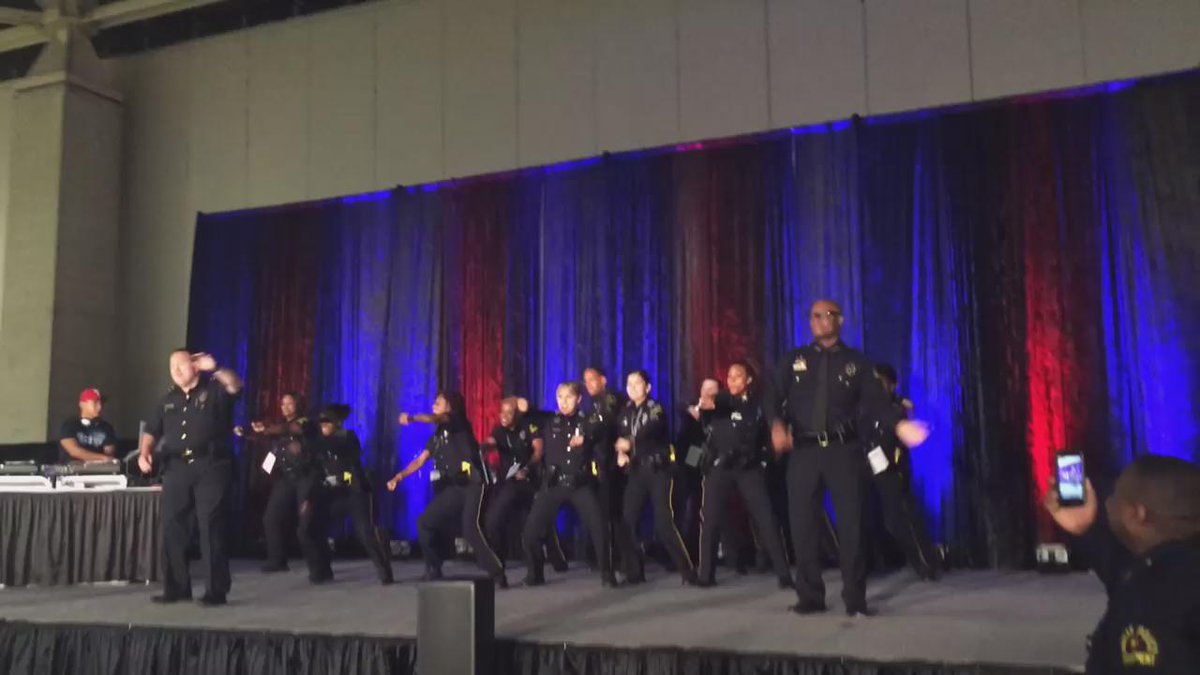
He’s been there, as a kid growing up in Dallas, as a police officer and as a grieving father who lost a son to a tragic confrontation with law enforcement. And, like the rest of us, he watched on television as deadly, racially tinged police shootings sowed bitterness and polarized communities elsewhere.
Love Sex
“I know you’ve watched the negative police shootings that have happened in other cities, the protests that have happened in other cities,” he told youngsters at the Kay Bailey Hutchison Convention Center. “What we want to do is take that negative opinion you might have and have you talk to us about it.”

Brown deserves enormous praise for this fine example of proactive community policing. Not many police chiefs are willing, or able, to put themselves out front on such a prickly issue.

Improving community-police relationships, however, has been a prime focus since Brown took the department’s top job in 2010. The department began a Dallas Police Support Coalition to bring outside voices to police policies and operations. Now he is passionately talking to youngsters about what they can do to help the police, and protect themselves and their communities.

Brown said he picked 10- to 15-year-old boys and girls for the outreach rally because that’s when he began to form his opinions about police. It was during the height of Dallas’ school integration struggle. Brown could have harbored only negative feelings about police. Instead, he said, positive role models — from teachers and relatives who were police officers — helped him see policing favorably.
Jav
Lessons learned early about respectful interactions with police could avert deadly confrontations. Cornet Garner, 11, who lives in Oak Cliff, told a Dallas Morning News reporter he learned the importance of keeping his hands visible and out of his pockets when talking to police, and not to walk in dark alleys, which could make him seem suspicious.

“I never heard that before today, but it makes sense,” he said.

Ultimately, change must come on the streets from officers on the beat and residents themselves. Brown, however, earns praise for personally setting an important tone needed to break down barriers of mistrust.

Editorial: 50 years later, Congress is failing the Voting Rights Act


Today marks the anniversary of the moment that this country corrected a “clear and simple wrong.” It’s the day that President Lyndon Johnson signed the mighty Voting Rights Act of 1965.
javlibrary.com
This giant step in assuring ballot-box justice for all Americans led to enormous gains in black voter registration and political representation.

But the 50th anniversary of the courageous bulldozing of Jim Crow barriers feels like a mostly hollow milestone.

Any real celebration will remain stalled until Congress fixes a flawed formula in the law that the Supreme Court ruled two years ago was outdated and, therefore, unconstitutional.
Jav Prostitutes
This newspaper agreed with the court in its Shelby County vs. Holder decision: An updated standard was needed to determine which states must “pre-clear” with Washington any changes in their election practices. After all, those on the existing list wound up there based on minority voter turnout and registration from the 1964presidential election.

Rather than continuing a practice based on data more than four decades old, the court encouraged Congress to fix the formula. That’s a challenge we too have regularly sent to Washington.

Our bottom line: The need for pre-clearance persists; it couldn’t persist as written.

It’s way past time for Congress to clean and sharpen those teeth in the Voting Rights Act. Yet well-intentioned efforts continue to bounce into the gutters of the status quo.

Time and again, the conversation turns on an everything’s-fine-as-it-is misperception or into a battle between Republicans and Democrats over which party is most guilty of trying to enhance its prospects at the voting box.

That partisan paralysis leads us to again suggest that Congress consider forming a bipartisan commission, as it did to tackle military base closings, to build parameters for a new voting act formula.

Rep. Bob Goodlatte, R-Va., chairman of the House Judiciary Committee, is one of those who claims the voting act is fine the way it is. But in the last five years, 21 states have put new restrictions on the vote in place. In 15 of those states, the rules — ranging from voter registration rollbacks to early voting cutbacks to voter ID requirements — will play a first-time role in a presidential election next year.

That should rattle anyone who cares about voting participation and fairness.

You may recall that just hours after the Supreme Court’s 2013 ruling, then-Texas Attorney General Greg Abbott put into effect a strict and controversial photo ID lawthat had previously been blocked under the Voting Rights Act.

The Justice Department and others have fought back, today winning at the Fifth Circuit Court of Appeals. But none of that prevented the ID law from staying in place during the 2014 election. Until Congress acts, the only recourse is after the fact — long after winners and losers are tallied.

Capitol Hill’s backsliding contrasts dramatically with previous enthusiastic and bipartisan decisions to reauthorize the historic law four times, most recently in 2006.

Early on, the Voting Rights Act helped stamp out state and local jurisdictions’ blatant disenfranchising of voters, primarily African-Americans, through poll taxes, literacy tests, good character tests, fraud and manipulation.
Jav Love
These days, discrimination is subtler, more nuanced — and sometimes tougher to prove: For instance, gerrymandering and at-large districts, reductions in voting hours and days, and the voter ID laws.

That’s why Congress must view the relentless protection of voting rights as a bipartisan issue. Remember LBJ’s charge to lawmakers in those turbulent yet hope-filled days of 1965:

“The Constitution says that no person shall be kept from voting because of his race or his color. We have all sworn an oath before God to support and to defend that Constitution.”

Will the people’s representatives in Washington step up to that challenge?